Here’s my honest truth about packing: I love clothes. I want options. I want to feel prepared. I want to open my suitcase at my destination and actually feel excited about what’s in there.
At the same time? I do not love an overflowing suitcase. There’s something about it that feels like clutter rather than abundance — the same feeling I get when I look at a closet full of clothes I never wear. It’s not freeing; it’s exhausting!
I remember visiting my parents for a week long ago. I brought some new outfits I had recently fallen in love with and was excited to wear. But once I got there, I didn’t want to wear most of them anymore. They just didn’t feel right for the trip, and I hated my options. Not to mention I was freezing because I wasn’t properly prepared for the actual weather. 😭 Suitcase full of clothes, and I felt trapped.
After that, I was like oh absolutely not — never again.
So you know me — I got to work reverse engineering what went wrong and created not just a solution, but an entire framework for how I pack for trips. And, it’s not necessarily about bringing less. It’s about packing differently.
Before I walk you through the system, let me show you what most of us do instead, because it’s probably more familiar than you’d think.
Why You End Up Hating What You Packed (Even When You Tried)
Usually, overpacking isn’t random. It’s actually thoughtful — just not strategic. Here are the three biggest mistakes most of us make:
You pack for every “what if.”
What if it’s cold one night? What if there’s a nicer dinner? What if it rains?
So you pack for every possible version of the trip instead of the actual trip. Which sounds responsible… until your suitcase is overflowing with things you never touch.
You pack one outfit per day.
Seven days = seven separate outfits. Sounds logical, but if none of those pieces cross-mix, you actually end up with fewer outfit options than you think. (This is exactly what happened to me on that family trip. I felt trapped and underprepared.)
You pack pieces you love individually
You grab things that fit well, feel good, or seem fun to wear — without thinking about whether they actually work together as a whole wardrobe.
None of these are bad intentions. They’re just what happens when you pack without a system.
And the result is often the same:
- an overflowing suitcase
- extra baggage fees
- decision fatigue every morning
- and somehow still feeling like you have nothing to wear
The framework below fixes all of those problems at once.
Step 0: Before You Pack Anything, Do This First
Don’t skip this step, or things will go sideways FAST.
Before you open your closet or touch your suitcase, sit down and answer these questions:
- How many days is the trip?
- What are the average highs and lows — daytime AND evening?
- Will it rain? Is it humid?
- What are my actual activities? List everything — sightseeing, hiking, beach days, dinners out, work meetings, casual days, special occasions. Be realistic, not aspirational.
- Will you have access to laundry?
This step replaces vague “what if” thinking with actual information. When you know you have three sightseeing days, two beach days, and one nicer dinner, you pack for that trip — not every possible version of a trip.
Save this as a note in your phone and fill it out before every trip. It takes five minutes and it’s the foundation the entire packing list is built on. For example:

It’s super simple, right? But it makes a huge difference in getting clear on what you actually need to pack for.
Step 1: Start With Your Anchor Shoes
Once you know your activities and weather, start with shoes first.
This is probably the opposite of how most people pack, but shoes are the most practical part of your wardrobe. Different activities require different types of shoes, and your bottoms need to work with those shoes. THEN you can figure out tops.
Think in shoe categories, not specific pairs:
- walking/support shoes for sightseeing or active days
- casual everyday shoes
- a slightly dressier option if needed
The more multipurpose the shoe, the better.
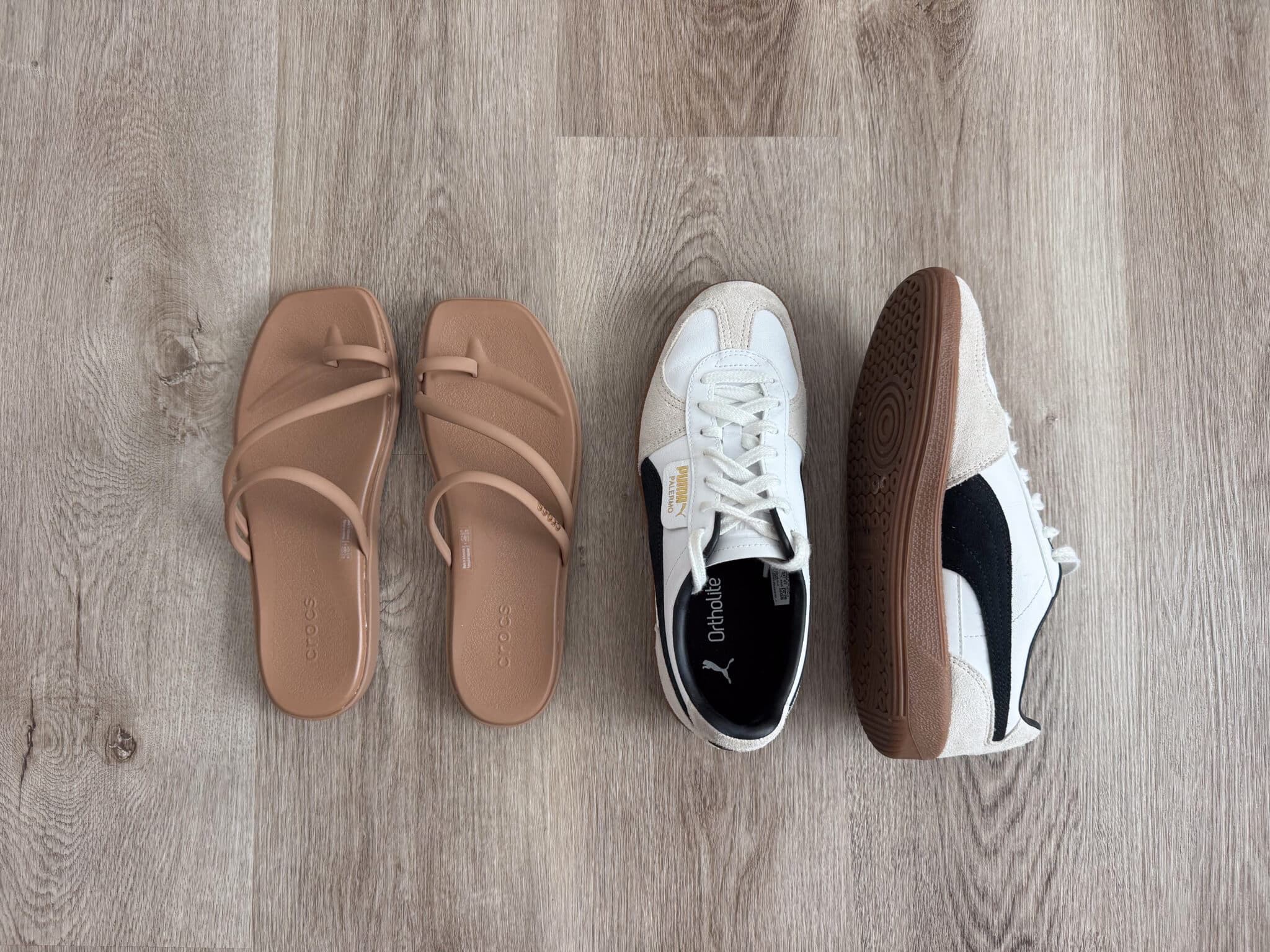
For example:
- a sandal that’s comfortable and water-resistant like THIS one (SOOO COMFY!!!) or THIS one
- a sneaker that works with jeans, dresses, AND lots of walking, like THIS one (cushioned footbed!)
Start with the shoes you truly need for your trip. Nice-to-haves can come later if you have room.
Step 2: Choose Your Anchor Bottoms
Next, choose 1-3 bottoms to start with based on:
- your activities
- your shoes
- and versatility
Reach for neutrals first. Your bottoms become the anchor for your entire travel capsule wardrobe, so the more versatile they are, the more outfit combinations you get later.
You’ll edit the number of bottoms you have later. Just start with 1-3 here first.
Step 3: Build a Simple Color Palette
Now that you have your shoes and bottoms, it’s much easier to build a color palette around them. I usually recommend:
- 3-4 neutrals
- plus 2-3 accent colors
The goal is simple: everything should “talk” to each other.
This is what gives you flexibility and options without needing a giant suitcase.
Step 4: Choose Tops Using the Cross-Mix Test
Now you can choose your tops.
As you go through options, ask: Does this top work with at least two of my bottoms?
If the answer is no, it probably stays home.
This one rule dramatically cuts down on overpacking while still giving you lots of outfit options. For example, 3 bottoms + 5 tops doesn’t just equal 5 outfits. If those pieces mix together well, you suddenly have 15 potential combinations available.
A few ways to create variety without packing a million things. Aim for:
- a neutral basic
- a top with texture or detail
- a print or accent color (or both!)
That combination usually gives enough visual variety to keep outfits interesting without feeling repetitive.
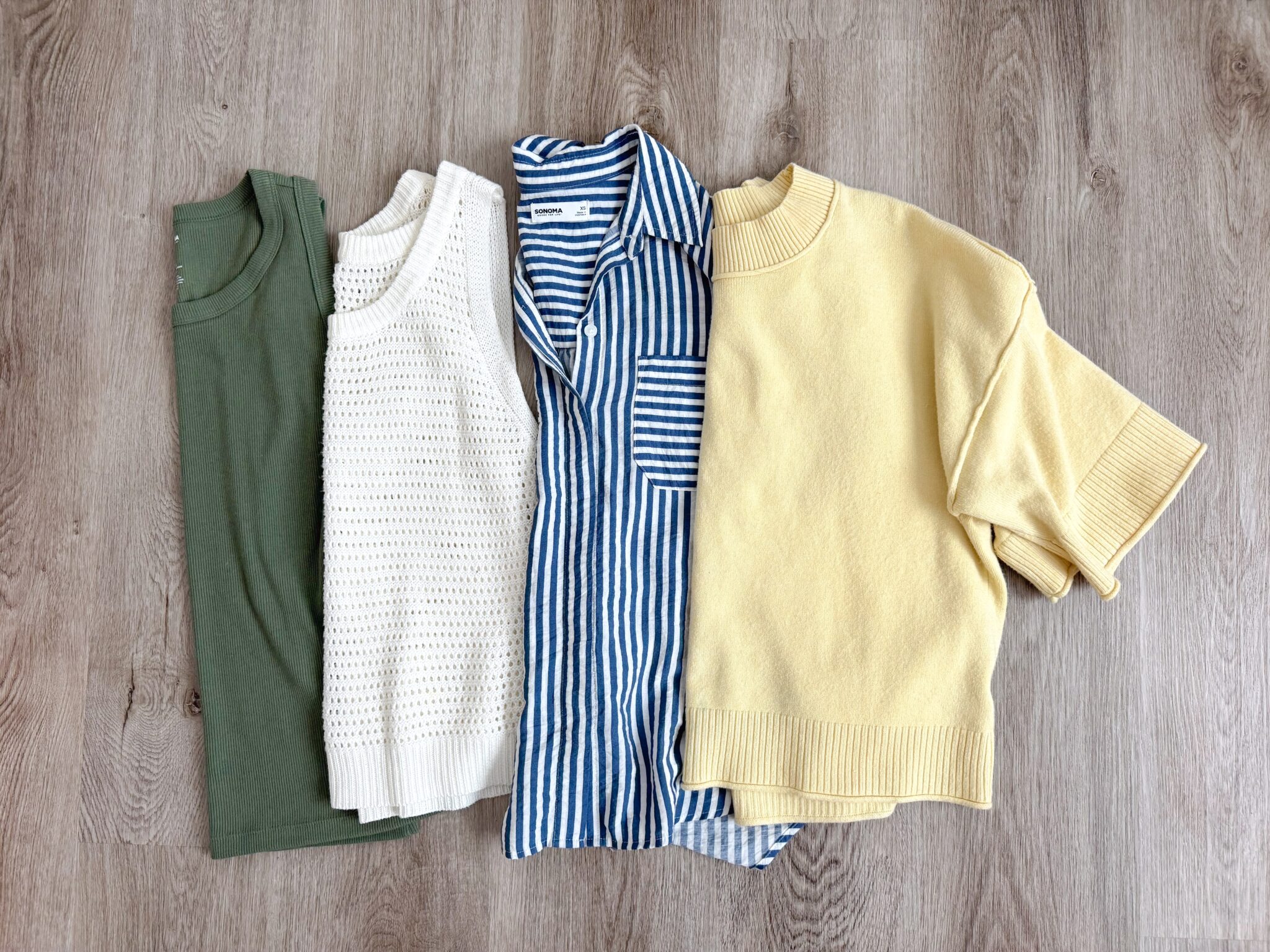
Example above: neutral ribbed tank, crochet sleeveless sweater, blue/white striped print top, yellow short sleeve sweater. This mix gives you lots of variety to make your outfits look different each day while bringing fewer clothes!
Step 5: Add Layers (Fewer Than You Think)
Now go back to your weather research. Will you truly need layers every day, or just occasionally? For most trips:
- shorter trips: 1–2 layers
- longer trips: 2–4 layers
Think:
- denim jacket
- cardigan
- blazer
- neutral casual jacket, like a utility, chore, or bomber jacket
And just like everything else, layers should work with most of your outfits — not just one. If a layer only works with one outfit, it’s probably not earning its spot in the suitcase.
Step 6: Scale It to Your Trip Length
At this point, you probably have a solid starting capsule. Now it’s time to scale it to your actual trip length.
These numbers are not rigid rules. They’re just a framework to help you avoid wildly overpacking while still having enough options to feel good about what you’re wearing. Because listen… I am not trying to survive a 7-day trip with one pair of pants and three shirts, haha. 😂 I like options too.
Here’s the general formula I use:
Bottoms Formula
Take the number of days in your trip, divide by 2, then optionally subtract 1 if you want to pack more minimally.
(days of trip ÷ 2) – 1
Examples:
- 4-day trip = 2 bottoms
- 6-day trip = 2–3 bottoms
- 8-day trip = 3-4 bottoms
- 10-day trip = 4-5 bottoms
And again, FLEX this depending on:
- your activities
- laundry access
- weather
- how much outfit variety you personally like
Tops Formula
For tops, I usually go the opposite direction and add a little more flexibility and variety.
(days of trip ÷ 2) + 1 or 2
Examples:
- 4-day trip = 3–4 tops
- 6-day trip = 4–5 tops
- 8-day trip = 5–6 tops
- 10-day trip = 6–7 tops
This works because your tops are cross-mixing with your bottoms, so you end up with WAY more outfit combinations than the raw numbers suggest.
Remember…
- 3 bottoms
- 5 tops
doesn’t equal 5 outfits. It can create potentially 15 outfits. If those pieces work together well, you suddenly have a ton of combinations available without needing a giant suitcase.
A Note About Workout Clothes and Special Occasion Pieces
These are usually the categories that throw the whole formula off, haha. 😂
If you know you’ll genuinely work out on your trip, pack for the number of workouts you realistically plan to do, not your fantasy self who suddenly becomes a marathon runner on vacation. (Done that, haha! 🙋🏻♀️)
Special occasion pieces are a little different because sometimes they don’t cross-mix. A wedding guest dress or a very specific dinner outfit may only serve one purpose. I usually don’t count those in my formulas for bottoms and tops, and that’s okay.
The key is being intentional about it. If you know you need one special outfit, plan for it on purpose instead of throwing in three extra “just in case” options. That’s usually where overpacking starts snowballing.
The Goal Isn’t Minimalism
The goal is enough variety to feel good and prepared — without dragging around a suitcase full of “just in case” pieces you never actually wear.
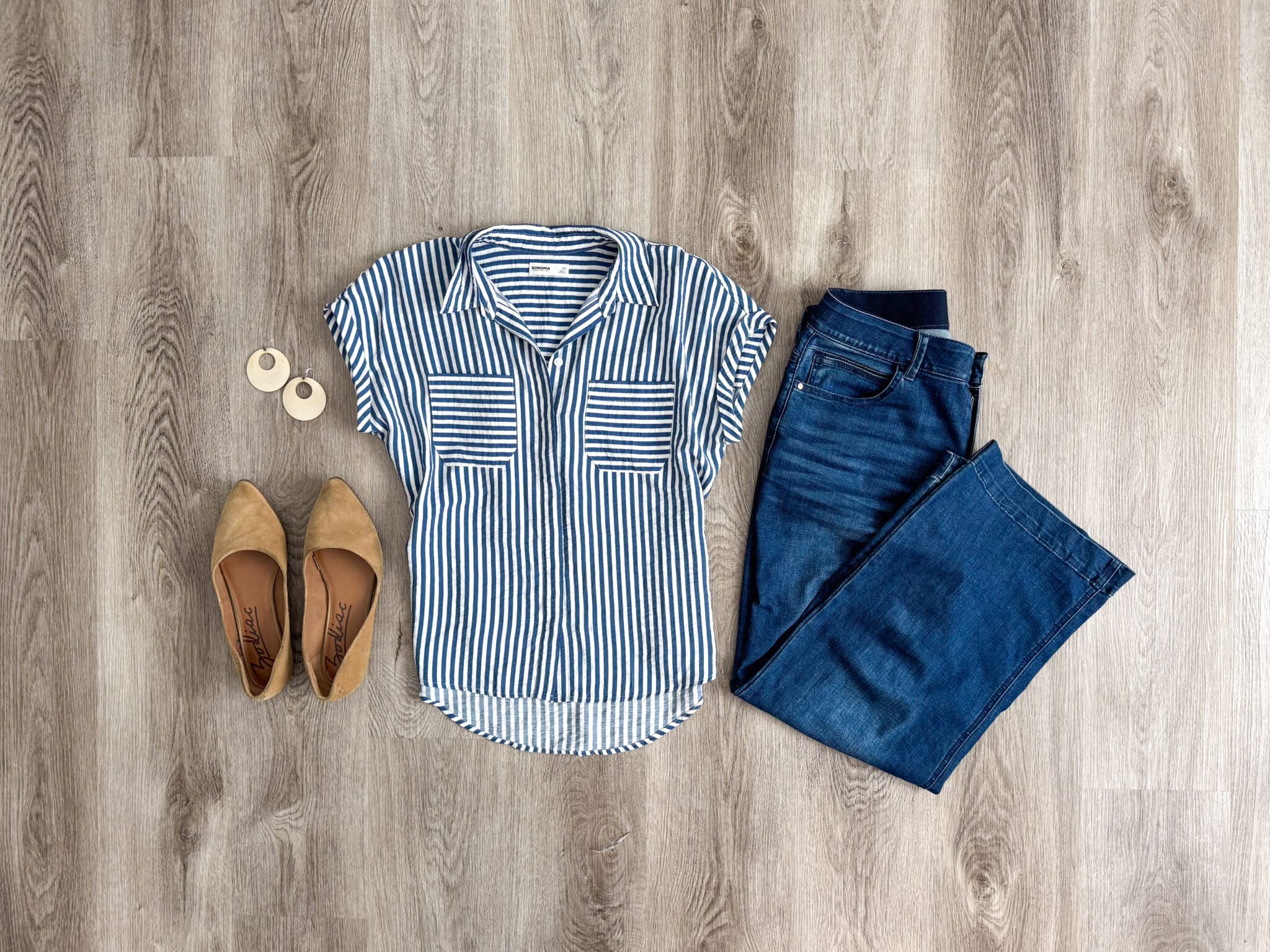
Step 7: Do a Final Outfit Check
This step matters more than people think! Before you zip your suitcase, quickly run through your outfits.
Especially check combinations you’ve never actually worn before. Future You will be VERY grateful. 😅
Here’s the quick checklist I use:
- Does every top work with at least 2 bottoms?
- Do my layers work with most outfits?
- Am I packing duplicates unnecessarily?
- Am I packing for my actual trip or imaginary scenarios?
- Do I genuinely feel good about these outfit options?
Adjust from there.